The Hikikomori Body

Fiorenzo Ranieri

Paper presented at the conference “Solitude and Relationships”, organised by the Order of Psychologists of Tuscany on 22–23 January 2026 (proceedings available at:

https://www.fondazionepsicologi.it/quaderni/solitudine-e-relazioni-volume-2/)

Introduction

This contribution offers some reflections on the relationship that adolescents and young adults living in voluntary social withdrawal — commonly referred to in the literature as hikikomori — have with their own bodies. These observations draw on my clinical experience and on findings from the scientific literature. Further valuable insights emerged from the annual seminar The Hikikomori Phenomenon – A Psychoanalytic Perspective on Psychic and Social Withdrawal Across the Life Cycle, organised by the Martha Harris Study Centre in Florence and co-led with Dr Miriam Monticelli.

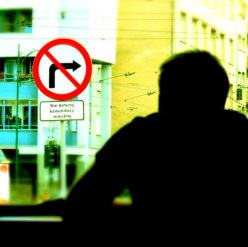
When we meet adolescents and young adults in social withdrawal, what strikes us is not only their absence from the world, but also a particular mode of bodily presence. The body is there — yet somehow withdrawn, suspended, as though it needed to pass unnoticed. Continue reading The Hikikomori Body

Psychic Withdrawal and Maladaptive Daydreaming in Adolescents and Young Adults

Fiorenzo Ranieri

Psychic withdrawal represents one of the most enigmatic and potentially fruitful experiences of adolescent development. It is the movement through which the mind retreats from the external world to inhabit an inner elsewhere, populated by images, fantasies, and scenarios that take on the function of refuge, protection, or compensation. It is within this threshold between the internal and external worlds, between thought and action, that the phenomenon of maladaptive daydreaming can be situated: a form of intense and immersive imaginative activity which, when it loses its symbolic and relational function, may become a genuine psychic withdrawal.

From Social Withdrawal to Psychic Withdrawal

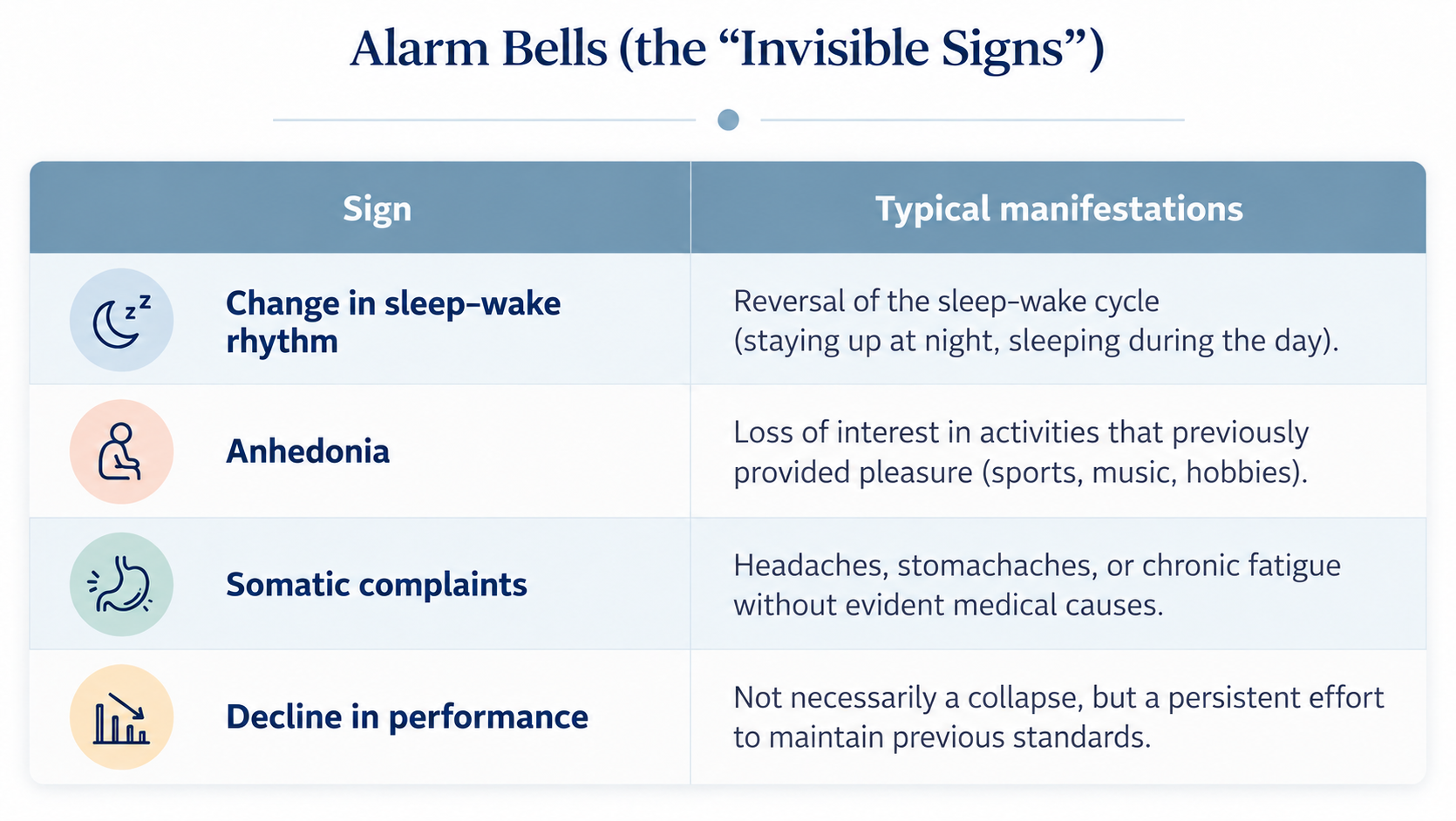
Over recent decades, the phenomenon of hikikomori has drawn attention to visible social withdrawal: young people who physically isolate themselves, shutting themselves in their rooms and discontinuing relationships and activities. However, observable withdrawal is often the final stage of a deeper, internal, and invisible process: a psychic withdrawal that precedes and underlies behavioural withdrawal.

The individual progressively distances himself or herself from shared experience, taking refuge in a self-constructed mental world in which a sense of control and identity coherence can be maintained. Without this imaginative regression, no enduring social withdrawal would be possible: the body can isolate itself only after the mind has already withdrawn.

Continue reading Psychic Withdrawal and Maladaptive Daydreaming in Adolescents and Young Adults